
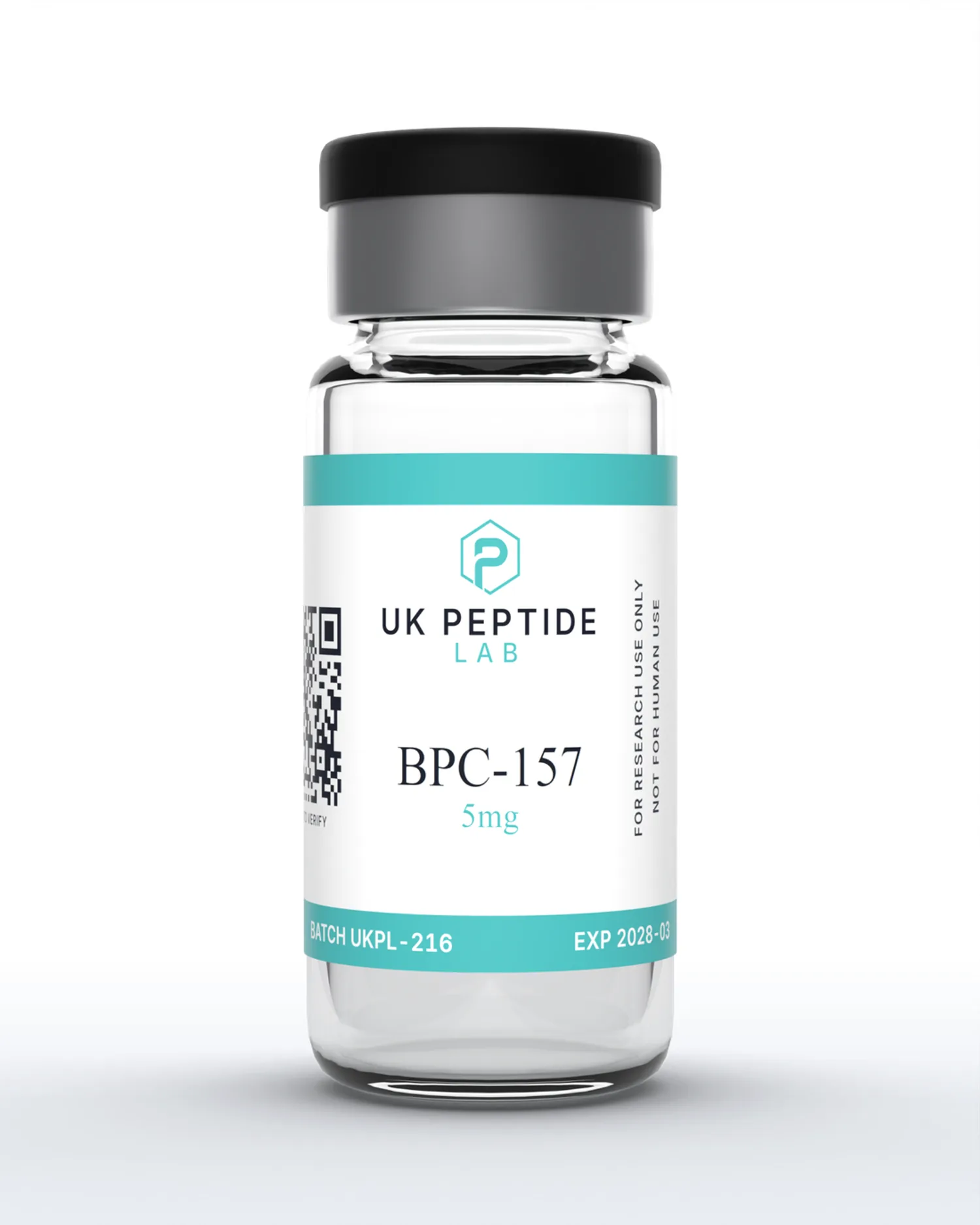
BPC-157
5mg
BPC-157, short for Body Protection Compound-157, is a 15-residue synthetic peptide based on a sequence found in human gastric juice. It is among the most heavily referenced peptides in regenerative research, with studies reporting protective and repair-associated activity across tendon, muscle, nervous-system and gastrointestinal tissue, and interactions with the nitric-oxide system and growth-factor pathways. Unusually, it stays stable in gastric juice, part of why it has drawn such wide research attention. Lyophilised powder, released against a third-party HPLC certificate on this page. In-vitro research use only.
Published research on BPC-157 is indexed on PubMed. See our full UK buyer's guide for Research Peptides.
Intended Use: Strictly for in-vitro laboratory research. Not for use in humans or animals. Not to be used in foods, drugs, or medical diagnostics. This product has not been evaluated by the MHRA or FDA. Buyer assumes full responsibility for safe handling and regulatory compliance.
98%+
Purity
LAB
Certified
SAME
Day Ship
Quantity
Add £29.01 more for free UK delivery
Damaged or lost? Free reshipment guaranteed
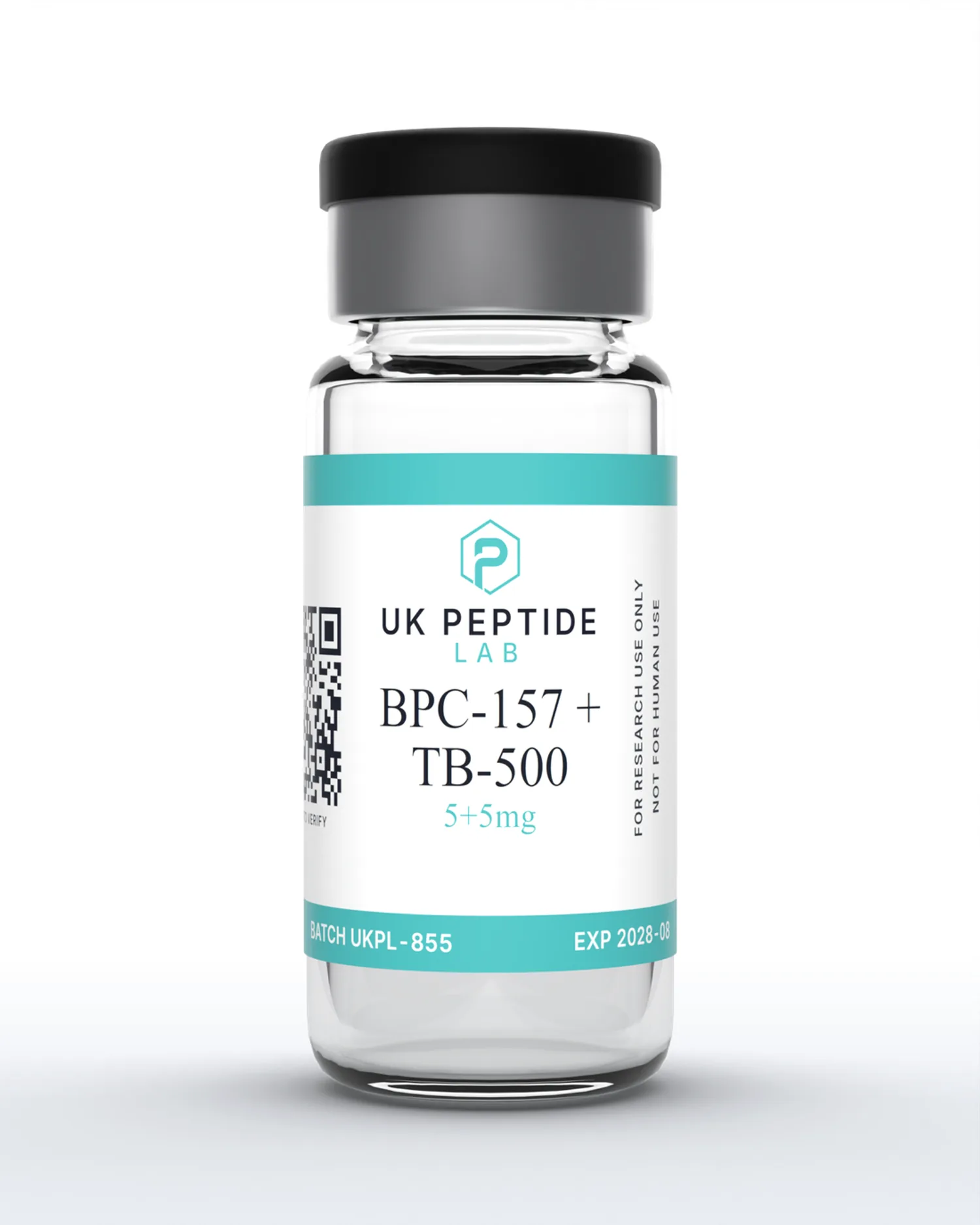
BPC-157 + TB-500 5+5mg
Pre-blended BPC-157 + TB-500 vial for soft-tissue research.
All components in a single lyophilised vial. One reconstitution, one inventory line, one CoA.
Research Use Only
This product is intended strictly for research and laboratory use only. Not for human consumption, medical use, or diagnostic purposes.
Certificate of Analysis
Third-party tested
Lyophilised Stability
24 months
Sealed at -20°C, light-protected
Reconstituted Stability
Up to 3 months
Stored at 2-8°C after mixing
Cold-Chain Shipping
Always
Dry-cold pack, Royal Mail Tracked 24
Important Notice
All compounds are sold individually and do not include research supplies. Products are provided in lyophilised (powder) form and require proper reconstitution before use in research settings.
Related Products
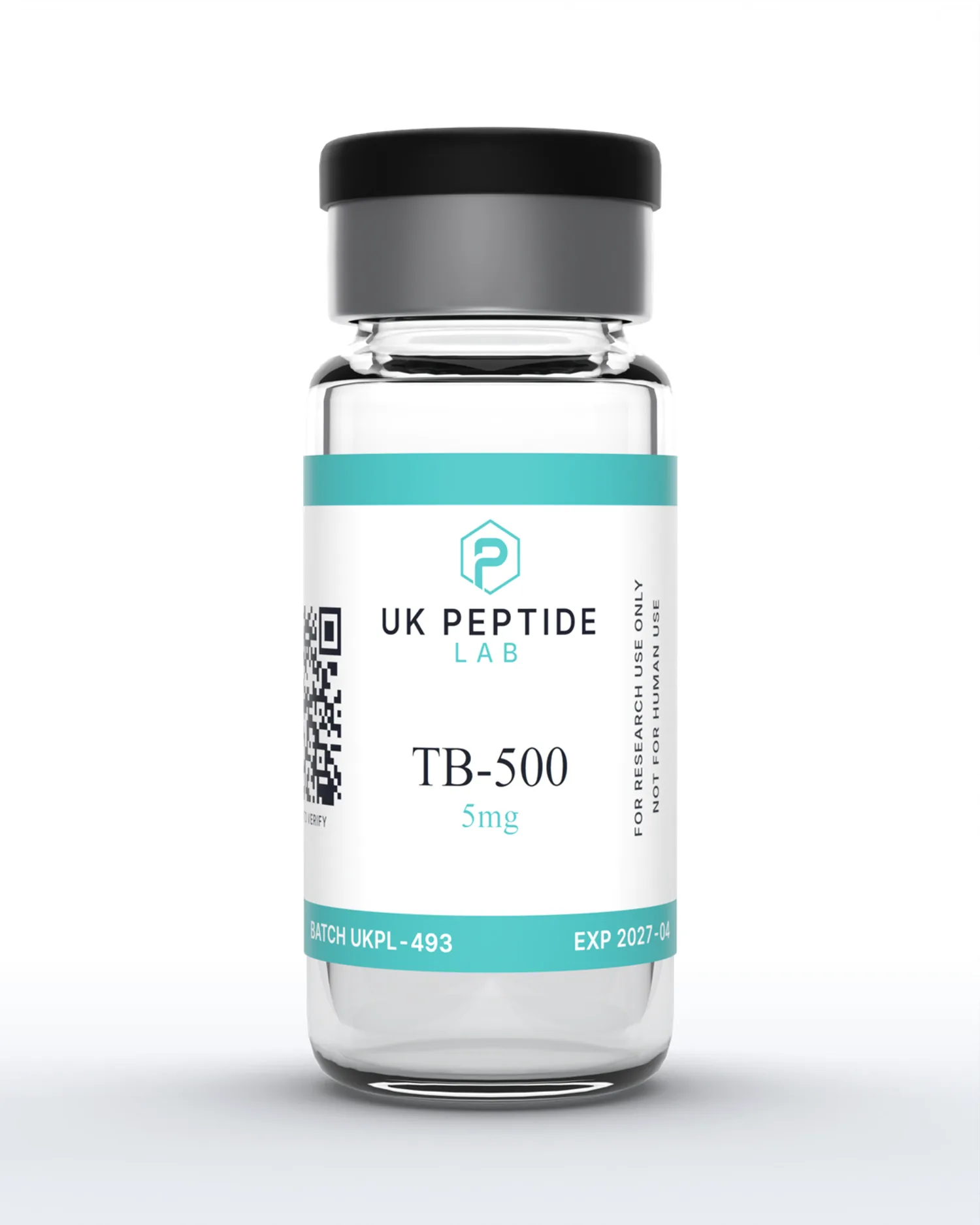
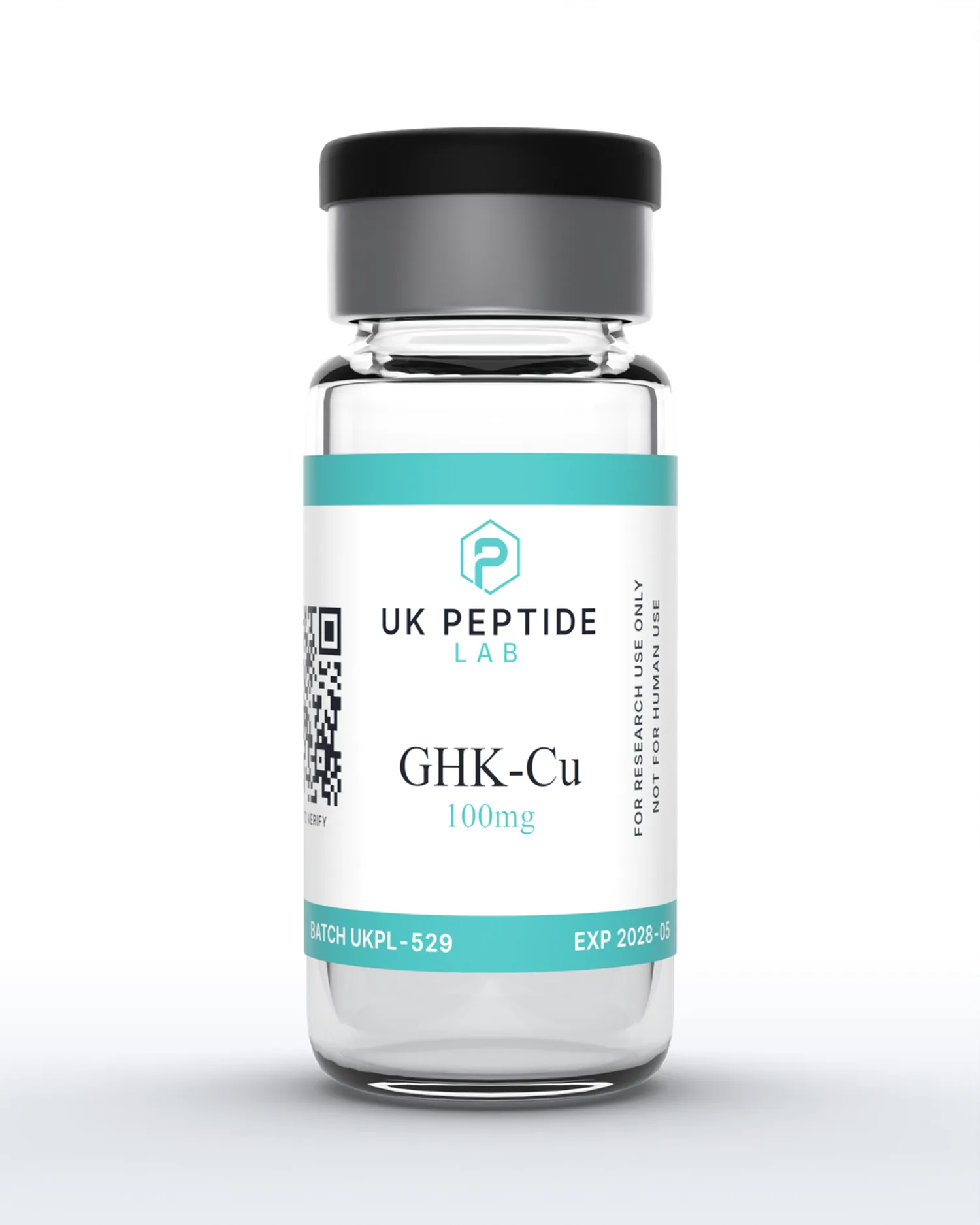
Product Specifications
Research Overview
BPC-157 is a synthetic pentadecapeptide, fifteen amino acids in length, taken from a cytoprotective protein sequence found in human gastric juice. Its research file is one of the deepest in the peptide field, spanning angiogenesis, tendon and ligament repair, gastrointestinal mucosal protection, and modulation of the nitric oxide pathway. What makes it unusual is its resilience: BPC-157 holds together in acidic conditions that break down most peptides quickly, a stability that has drawn attention to its cytoprotective behaviour across musculoskeletal, neural, and digestive tissue. In practice it is often paired in study designs with TB-500, a Thymosin Beta-4 fragment, as a complementary approach to tissue repair, with BPC-157 understood to work locally at the site of injury through angiogenic and anti-inflammatory routes while TB-500 drives cell migration systemically. That pairing has become a fixture of regenerative research. Ongoing preclinical work continues to map how the peptide intersects with growth-factor signalling and the cascades that govern wound healing.
Product Specifications
Laboratory Handling
- For long-term stability keep lyophilised vials at -20°C. Refrigerate the reconstituted peptide at 2-8°C and use it within 4 weeks.
- Reconstitute with bacteriostatic water and swirl gently, since vortexing or hard shaking can degrade the peptide.
- Maintain sterile technique through reconstitution and aliquoting, and work in a laminar flow hood where one is available.
- Steer clear of repeated freeze-thaw cycles by splitting the reconstituted solution into single-use aliquots.
Frequently Asked Questions
BPC-157
5mg · £15.99