
Research Blog
Guides, comparisons, and laboratory resources for peptide researchers.
BPC-157 Peptide Research Guide: Structure, Stability and Laboratory Use
Few research peptides have accumulated a preclinical literature as broad as BPC-157. This reference walks through its sequence, its unusual stability, the pathways it is studied against, and how to keep it intact in the lab.
Retatrutide Explained: The Triple Receptor Agonist Peptide
Three metabolic receptors, one molecule. Retatrutide engages GIPR, GLP-1R and GCGR at once, and that combination is why it has become the most-discussed compound in metabolic peptide research.
TB-500 vs BPC-157: How the Two Repair Peptides Compare
They share a shelf and a research reputation, yet TB-500 and BPC-157 are chemically unrelated and act through different routes. Here is what actually separates them, and why so many protocols run them together.
Reconstituting Research Peptides: A Step-by-Step Laboratory Method
Get the reconstitution step right and everything downstream, from concentration maths to shelf life, follows cleanly. This method covers solvent choice, technique, and the mistakes that quietly ruin a vial.
GHK-Cu Copper Peptide: Collagen, Matrix Biology and Laboratory Use
A tiny copper-carrying tripeptide that the body makes less of with each passing year, GHK-Cu has become a fixture in collagen, matrix and gene-expression research. This guide covers what it is and how to keep it stable.
CJC-1295 vs Ipamorelin: Two Pathways to Growth Hormone Research
Both raise growth hormone, but they reach it by entirely different doors. Understanding how the GHRH and ghrelin pathways differ is what makes the CJC-1295 and Ipamorelin pairing so widely studied.
Storing Research Peptides: Temperature, Light and Shelf Life
A peptide is only as good as the way it has been kept. This guide sets out the conditions that hold lyophilised and reconstituted material stable, and the habits that quietly wreck a batch.
Retatrutide vs Semaglutide: Triple Agonist Meets Single Agonist
One molecule reaches three receptors, the other reaches one. Setting Retatrutide against Semaglutide shows exactly what the extra receptor arms buy in a research context.
What is Retatrutide? A Complete Research Guide to the Triple Agonist
Retatrutide has moved from a curiosity to the reference point for multi-receptor metabolic research. Here is what the molecule is, how the three-arm mechanism works, and how to handle it at the bench.
BPC-157 and TB-500: A Combined Tissue-Repair Research Overview
Local versus systemic, angiogenic versus cytoskeletal. BPC-157 and TB-500 answer different halves of the repair question, which is precisely why they so often appear in the same protocol.
What is GHK-Cu? A Research Guide to the Copper Tripeptide
Small enough to slip through the skin, broad enough to touch thousands of genes. GHK-Cu is a copper-carrying tripeptide whose reach across collagen, matrix and gene-expression research is out of all proportion to its size.
Retatrutide vs Tirzepatide: What the Glucagon Arm Changes
The two peptides are close cousins from the same lab, separated by a single receptor. That one addition, the glucagon arm, is where nearly all the divergence in the research shows up.
Tesamorelin vs CJC-1295: Comparing Two GHRH-Class Secretagogues
Both borrow from the same hypothalamic hormone, yet one keeps the full sequence and the other trims it. Whether they preserve or flatten the natural GH pulse is what decides which belongs in your model.
Melanotan I vs Melanotan II: A Question of Receptor Selectivity
Similar names, very different reach. One hits a single melanocortin receptor with precision, the other sweeps across the whole family, and that gap decides which one your experiment actually needs.
Semax vs Selank: Two Russian Nootropic Peptides Compared
They look alike on paper, sharing a tail and a weight, yet they descend from different parent hormones and pull different levers. One leans cognitive, the other anxiolytic.
PT-141 (Bremelanotide): A Central Melanocortin Research Guide
Take Melanotan II, remove the arm responsible for pigmentation, and what remains points squarely at the brain's melanocortin receptors. That redesign is what makes PT-141 a distinct research tool.
MOTS-C: A Research Guide to the Mitochondrial-Derived Peptide
A peptide written into mitochondrial DNA itself, MOTS-C rewrote how researchers think about the mitochondrion. Since its 2015 discovery it has become a mainstay of AMPK, metabolic and mitochondrial-nuclear signalling research.
Cagrilintide: The Long-Acting Amylin Analogue Explained
Amylin has long been an awkward research target, too quick to aggregate, too short-lived to dose. Cagrilintide is the engineered answer, and its brainstem satiety route makes it a natural partner to the incretin peptides.
IGF-1 LR3: Mechanism, Pharmacology and Laboratory Use
Native IGF-1 is gone from the bloodstream in minutes and half-hidden by its binding proteins. IGF-1 LR3 solves both problems in one molecule, which is why it has become a standard stimulus in myogenesis and cell-proliferation research.
DSIP (Delta Sleep-Inducing Peptide): A Research Guide and Honest Evidence Review
Nearly five decades after it was pulled from rabbit blood, DSIP still has no confirmed receptor and no settled mechanism. This guide covers what is known, and is frank about how much is not.
CJC-1295 With DAC vs Without DAC: Same Receptor, Different Clock
One small tail turns a 30-minute peptide into an 8-day one. The receptor pharmacology is identical across both forms of CJC-1295; everything that differs comes down to how long the peptide stays in circulation.
KPV: The Anti-Inflammatory Tripeptide Research Guide
Just three amino acids clipped from the tail of a larger hormone, KPV keeps much of its parent's anti-inflammatory punch while dropping the pigment effects. Gut inflammation research is where it has found its home.
GLOW: The BPC-157, TB-500 and GHK-Cu Research Blend
Three of the most co-investigated repair peptides, brought into a single vial and a single reconstitution. GLOW is built for combined-pathway work where growth-factor, cytoskeletal and matrix mechanisms are studied together.
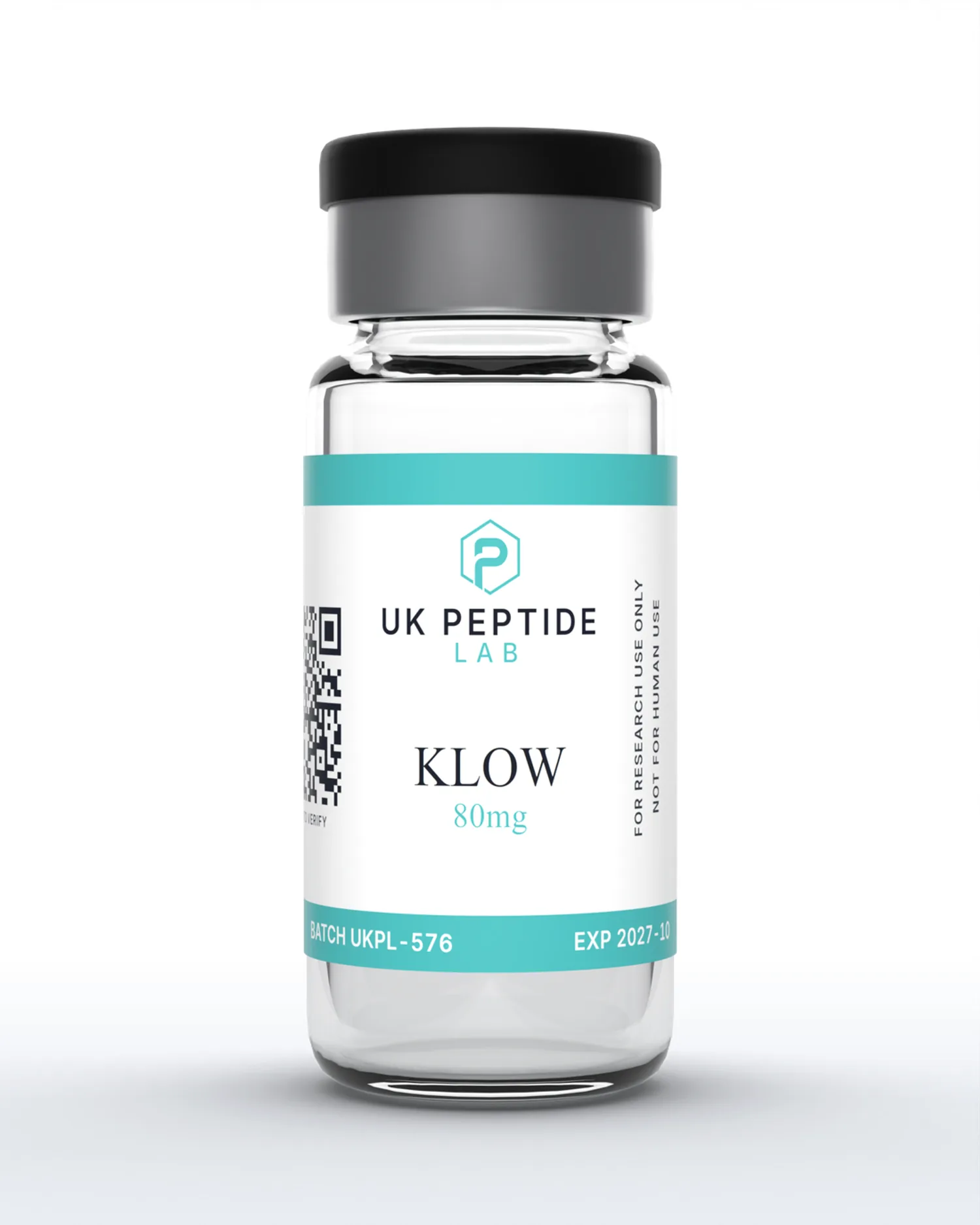
KLOW: The KPV, BPC-157, TB-500 and GHK-Cu Research Blend
Take the GLOW trio and add a fourth peptide aimed squarely at inflammation. KLOW pairs regenerative and anti-inflammatory mechanisms in one vial, widening the reach from connective tissue into mucosal and barrier-immunity research.
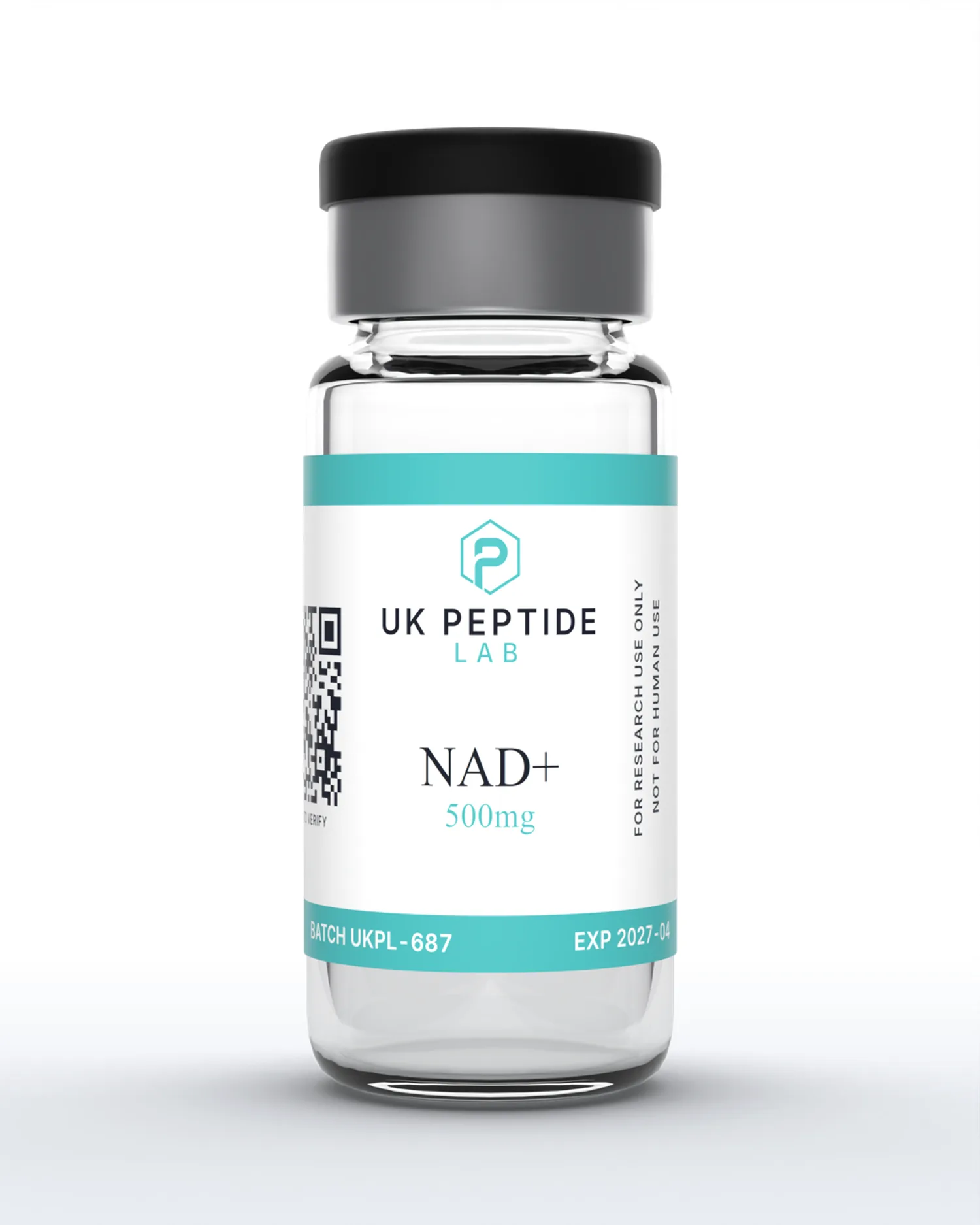
NAD+: A Research Guide to the Cell's Central Redox Cofactor
It carries electrons through respiration and feeds three enzyme families that shape ageing and DNA repair, then quietly declines as the years pass. Few small molecules sit at more crossroads of cellular biology than NAD+.
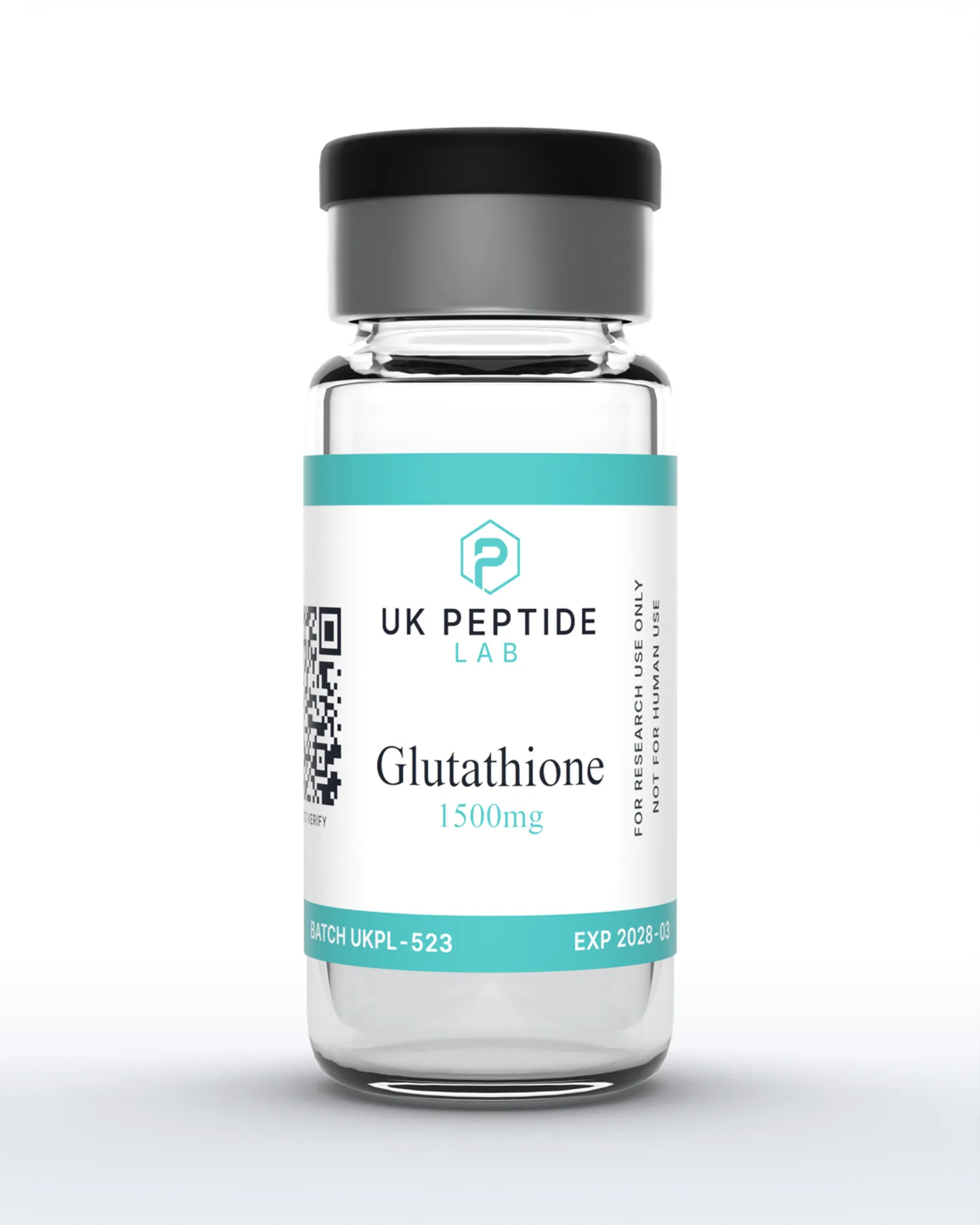
Glutathione: A Research Guide to the Master Antioxidant Tripeptide
Present in nearly every cell at millimolar levels, glutathione is the redox buffer the cytosol runs on. Its reduced-to-oxidised ratio has become one of the most-measured numbers in oxidative-stress research.